

By Maphuti Machabaphala
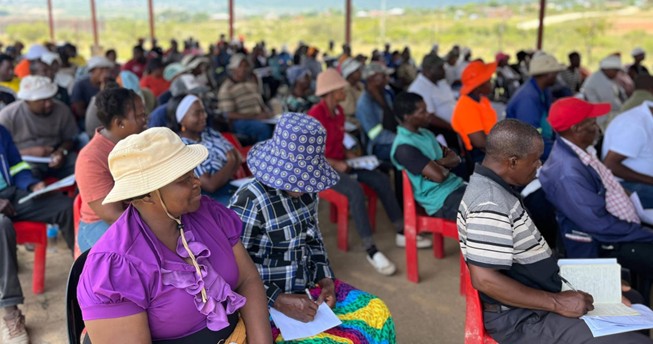
The Limpopo Department of Agriculture and Rural Development (LDARD), in collaboration with the Agricultural Research Council (ARC) and the South African Police Service (SAPS), has continued to strengthen small stock production across rural communities by equipping farmers with advanced technical knowledge and practical skills. The capacity-building programme reached farmers from Kalkspruit in Ga-Matlala, Moratapelo in Ga-Chuene, and surrounding areas within the Capricorn North Western Agro-Ecological Zone.
The initiative was aimed at empowering farmers to improve productivity, sustainability, and resilience in small stock farming, while preserving indigenous livestock systems that are well adapted to local conditions. Through targeted training sessions, farmers were introduced to a combination of traditional knowledge and modern livestock production practices, enabling them to make informed decisions that continue to enhance herd performance and reduce production losses.
The training covered critical focus areas, including indigenous livestock breeds and genetic preservation, breeding and stock selection, reproductive management, livestock feeding and nutritional management, and animal production enhancement techniques (Kaonafatso ya dikgomo). Farmers were also guided on farm record keeping and documentation, which remains essential for effective planning, performance monitoring, and improved access to markets and agricultural support programmes
In light of the recent Foot and Mouth Disease outbreak in the province, strong emphasis was placed on livestock health management. Farmers were sensitised on common small stock diseases, prevention and control measures, biosecurity protocols, and early disease detection and reporting. This component has strengthened farmers’ ability to protect their herds, limit the spread of infectious diseases, and safeguard livestock production within their communities.
By prioritising skills development and knowledge transfer, the programme sought to unlock the full potential of small stock production in rural areas. Farmers were encouraged to protect and improve indigenous breeds, enhance herd quality, and adopt sustainable livestock management practices that support long-term productivity and resilience under local farming conditions.
This intervention has formed part of LDARD’s broader commitment to supporting emerging farmers and positioning agriculture as a key driver of food security, sustainable rural development, and economic inclusion. Through ongoing skills development and strategic partnerships with institutions such as ARC and SAPS, the department has continued to support farmers in transitioning from subsistence farming to viable smallholder enterprises that contribute meaningfully to local economies.
Empowering farmers with practical knowledge has laid and continues to lay a strong foundation for resilient, productive, and food-secure communities.