
By Nape Masemola
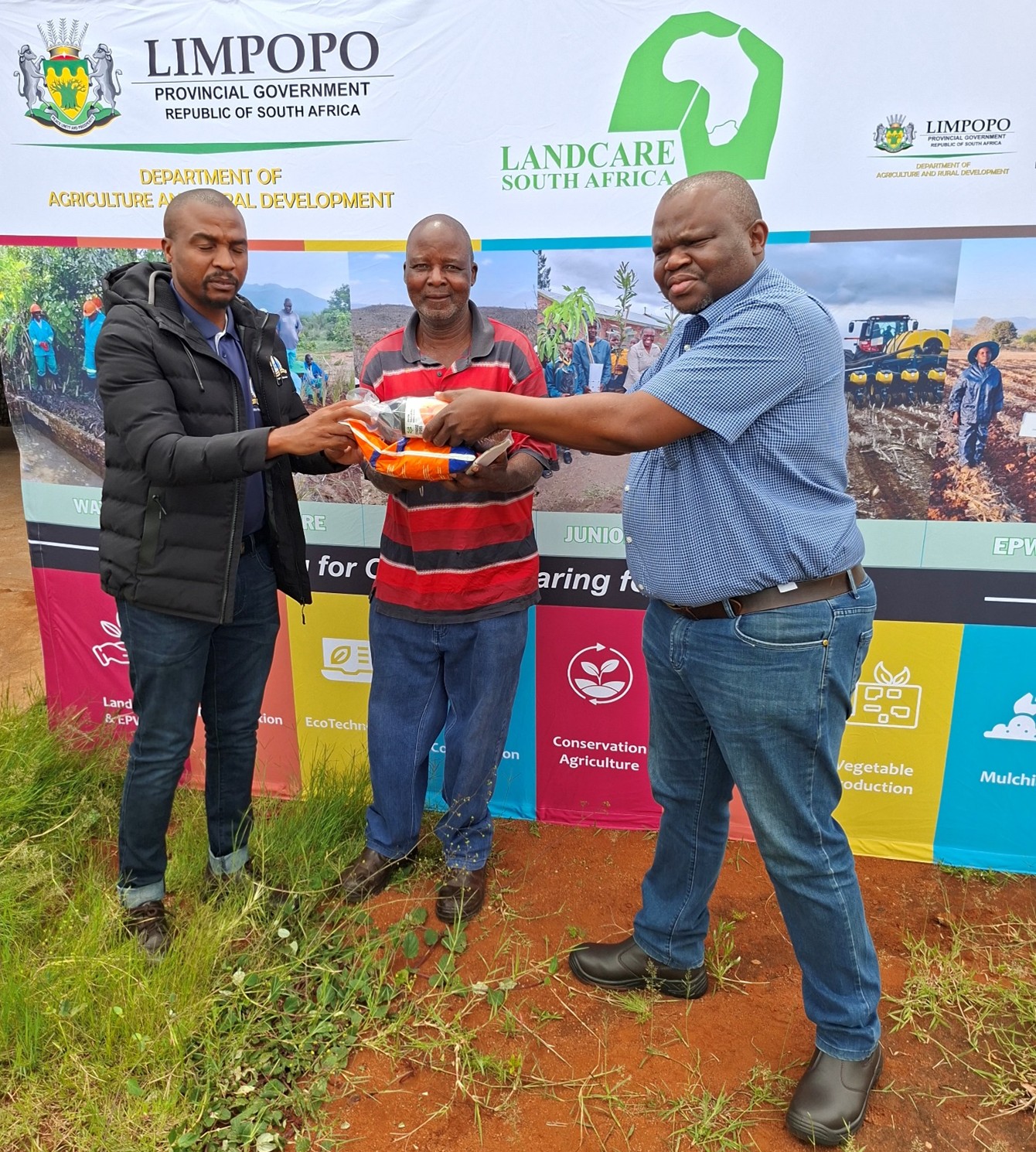
Director LandCare and Land Use Management Mr Richard Selemela (right) hands over home garden packs to members of the community at Ga-Matji Village in Sekhukhune
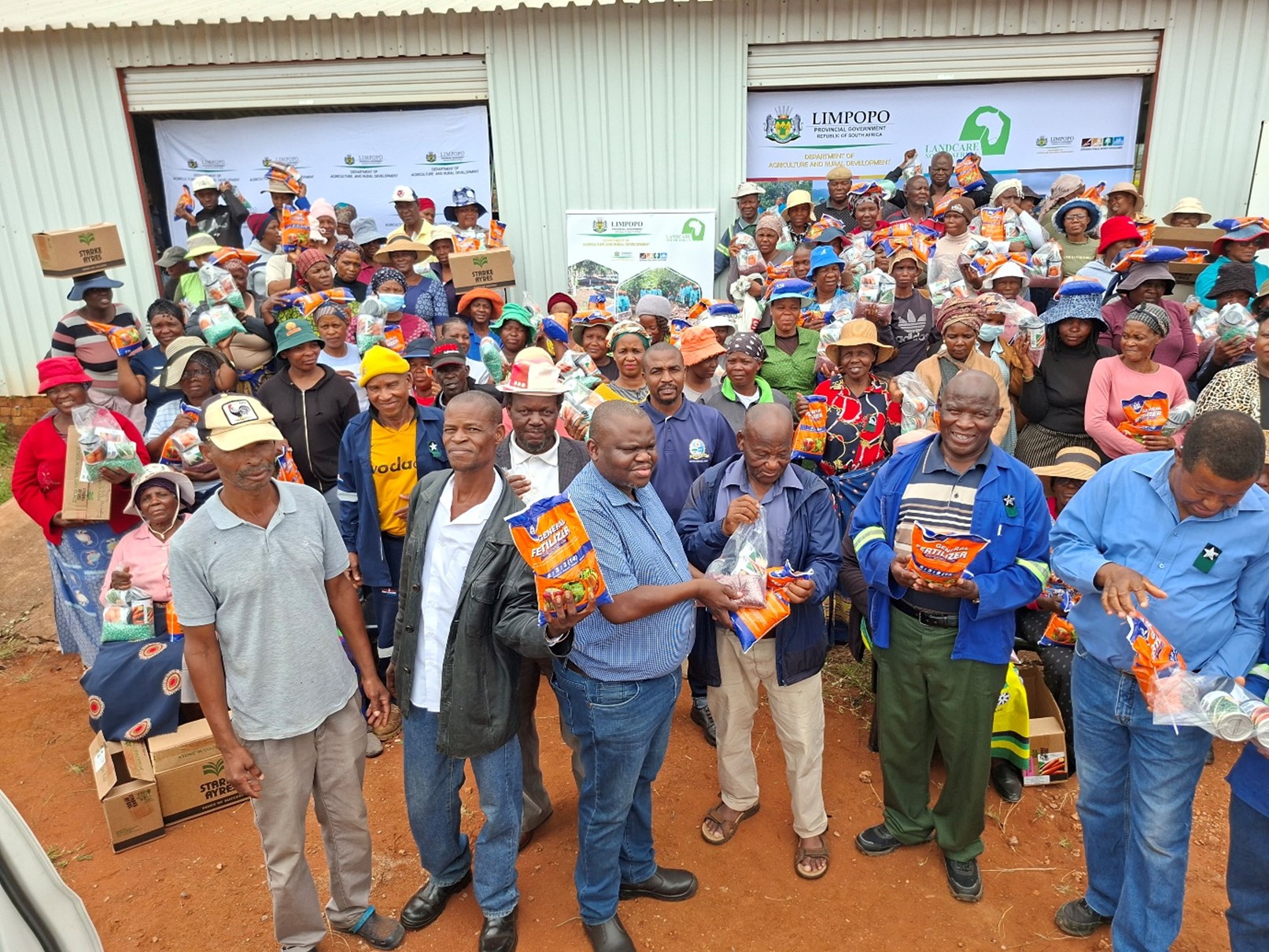
The Limpopo Department of Agriculture and Rural Development (LDARD) in partnership with the University of Limpopo (UL), Department of Agriculture, Forestry, Fisheries, and Environment (DFFE) and International Union for Conservation of Nature (IUCN) have handed over 180 household garden kits to the Mohlaletse community.
Each pack contains vegetable seeds and fertilisers designed to promote food security and sustainable land management through climate-smart agriculture.
Addressing Land Degradation: The event was held at Ga-Matji village, a key case study for crop and rangeland degradation. The area faces significant environmental challenges caused by climate change, unsustainable farming, and uncontrolled fuel wood harvesting. These factors hinder the land’s natural regeneration and threaten local food production.
Mr Richard Selemela, LDARD Director for Land Care and Land Management, thanked the community and the Royal House for embracing the initiative. He emphasised that the primary goal is for every household to establish a good garden to combat hunger and poverty. “By implementing agroforestry systems and climate-smart technologies, we aim to achieve land degradation neutrality. Building capacity for sustainable land management will ensure better arable land for future food production,” Selemela stated.
Economic Empowerment and Food Security: Ms Queen Ramogale from the UL Centre for Rural Change urged residents to utilise these gardens to mitigate the impact of rising food prices. She noted that these home gardens offer more than just sustenance; they provide an opportunity for income generation by selling surplus produce to neighbouring villages.
Global Impact: This initiative is part of the Global Environment Facility (GEF-7) funding cycle. The program focuses on land restoration and sustainable forest management. By targeting issues like invasive species and biodiversity loss, the project aligns South Africa’s local efforts with global environmental benefits.