
By Tshifhiwa Muifha
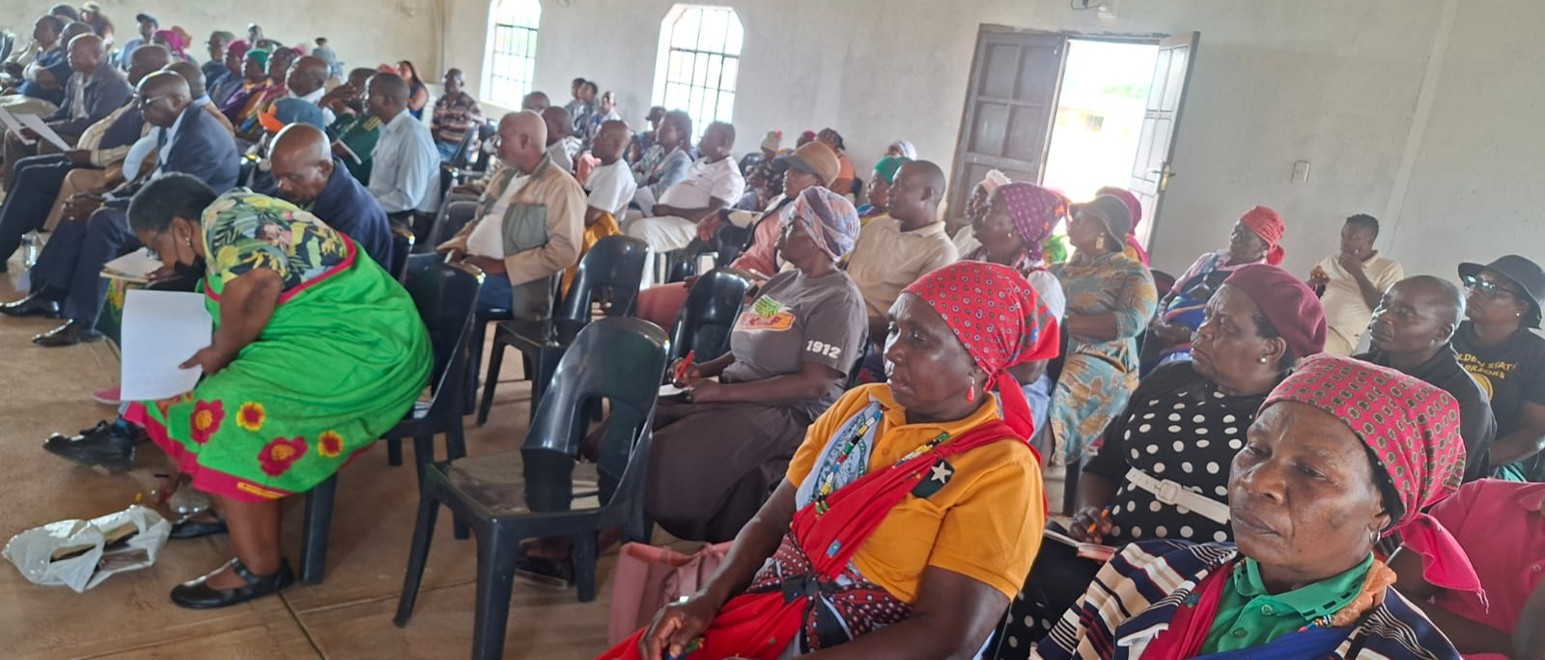
Farmers gathered at EPC South Africa Church in Dumela Village, under Collins Chabane Local Municipality, for a maize information day.
Farmers gathered at EPC South Africa Church in Dumela Village, under Collins Chabane Local Municipality, for a maize information day hosted in partnership with NTK Giyani, Green World, and the Limpopo Department of Agriculture and Rural Development (LDARD).
The information day aimed to equip farmers with practical knowledge on improved maize production, proper crop management and available agricultural support programmes.
Presenting on the selections of maize cultivars, NTK Giyani representative, Mr Robert Manzele, emphasised the importance of choosing cultivars that are resilient to different climatic conditions and suitable for the soil types in farmers' respective areas.
Vusani Nemutshili, Assistant Director at LDARD, encouraged farmers to regularly monitor rainfall forecasts, check soil moisture levels and ensure the correct application of fertilisers. He also highlighted common maize production challenges, including pest infestations, worms and fungal diseases, and the importance of appropriate control measures.
On fertilisation and weed control, Mr Risimati Hlungwani explained that soil type determines the amount of fertiliser required for optimal crop growth. He encouraged farmers to understand their soil conditions and apply fertilisers appropriately to improve productivity.
Representing Green World, Ms Fulufhelo Madi introduced the company's fertiliser products, explaining their role as soil conditioners and crop boosters. She further highlighted that the products could also be used on fruit trees.
The Producer Support Programme (PSP) was also featured in the days program. Mr Jeremiah Murovhi, Agricultural Adviser from Vhembe East Agro-Ecological Zone outlined the requirements for applying for support and urged farmers to ensure that they have all the necessary documentation to avoid delays in the application process.
LDARD continues to strengthen farmer capacity and create awareness of available support opportunities towards sustainable agricultural development.