

By Nape Masemola
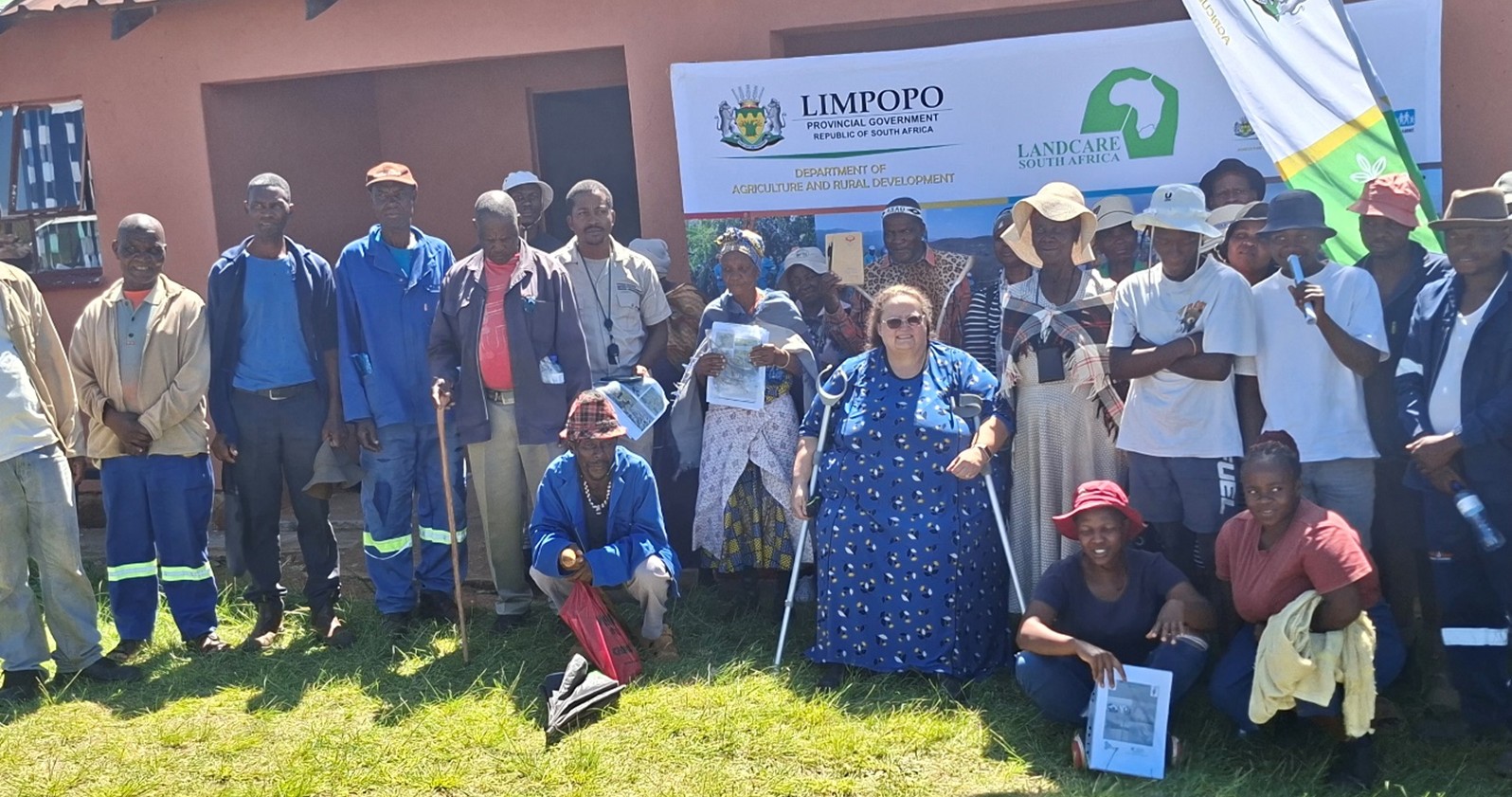
The Limpopo Department of Agriculture and Rural Development (LDARD) Sustainable Resource Management section in Partnership with the Agricultural Research Council (ARC) and the National Department of Agriculture (NDA) held the Bankrupt Bush information sharing session at Masoing Village in Elias Motsoaledi Local Municipality. The purpose of the session is to as outline by Me Elize Lundal -Magnuson a researcher from ARC is to ensure that farmers and land users understand the value of grazing land as well as capacitating farmers on the impact Bankrupt Bush plants and on how they can benefit from it. Me Lundal -Magnuson also warned farmers about the Risk of overgrazing and invasive Alien plants in the Masoing area which is in the highveld where most farmers rely solely on livestock production for food security. Me Elize Lundal -Magnuson encouraged farmers to protect the grazing land and other natural resource source to ensure sustainability of farming activities and that future generation can also benefit from them.
Although about 80% of the land is exclusively utilised for Agricultural activities, of which 11% of is arable and 69% is suitable for livestock grazing, the degradation of land mainly arises from woody plant encroachment (Phenomenon referred as an increase of trees and shrubs that supresses herbaceous layer). This was outlined by Researcher Dr Matswapo Phoko also from the ARC who was presenting on Seriphium Plumosum ((Bankrupt bush) meal as supplementary feeds for cattle. Dr Phoko indicated that one the limiting factors influencing livestock productivity under extensive production system in South Africa is the inadequate supply of nutritios feed and the woody plant encroachment which its effect is attributed to Overgrazing, rainfall, fire suppression and an increase in global carbon dioxide concentration.
To provide for the conservation of the natural agricultural resources of the Republic is an ACT which is referred to as Conservation of Agricultural Resources Act commonly known CARA and was promulgated as Act No.43 in 1983. The act and its objectives as explained by Mr Steven Kgobalale from the National Department of Agriculture Land care unit requires for protection of the vegetation, combating and prevention of erosion, combating and prevention of weakening/ destruction of the water sources, maintenance of the production potential of land and combating of weeds and invader plants. Mr Steven Kgobalale during his presentation also outlined instances when the act is applicable and that Permission need to be sought from authorities when Cultivation of virgin soil- Regulation 2, Cultivation of land with slope ≥12%- Regulation 3, Cultivation of land with slope ≥12%- Regulation 3, Burning of veld and utilisation of the burned veld- Regulation 12, and Establishment/ Planting of Category 2 plant species-Regulation
Mr Kgobalale concluded by stating that (Bankrupt bush) is classified as Indicators of bush encroachment and has been declared so in all the Provinces within the Republic (Regulation 16). and is defined as when a specific plant species starts to densify or getting more in such a way that it pushes away other existing species in a specific area and can be regarded as symptoms of poor land management practices therefore CARA does not outlaw these plants, but instead prescribes management practices aimed at preventing bush encroachment and at combating it where it already occurs:
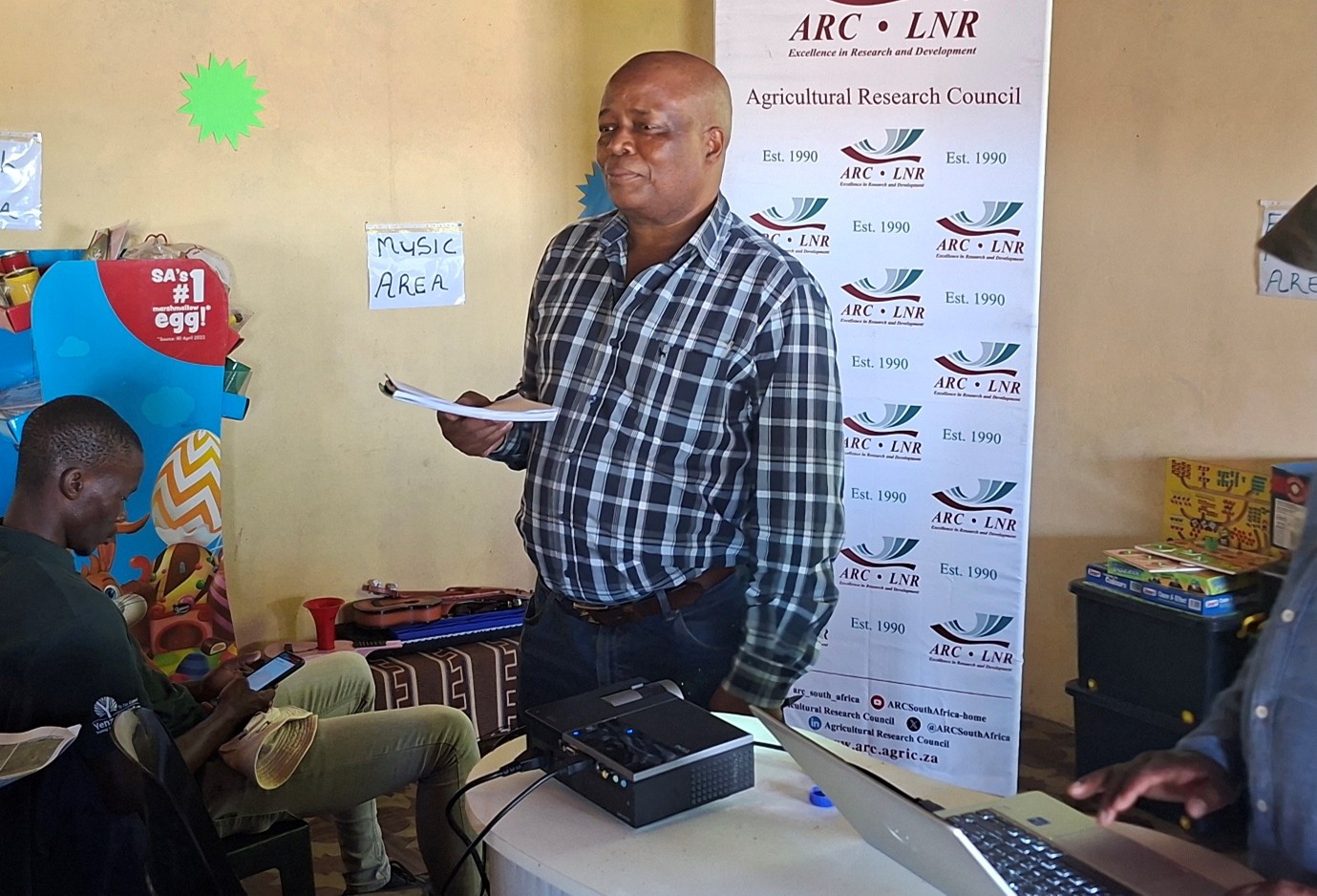
Mr Steven Kgobalale from the National Department of Agriculture Land care unit presenting on CARA during the Bankrupt Bush information sharing session at Masoing Village.